Northern Minnesota's structural timbers face distinct wood-destroying insect pressures due to high shoreline humidity and temperature extremes. In shoreline properties along Birchmont and the Lake Bemidji North Shore,…
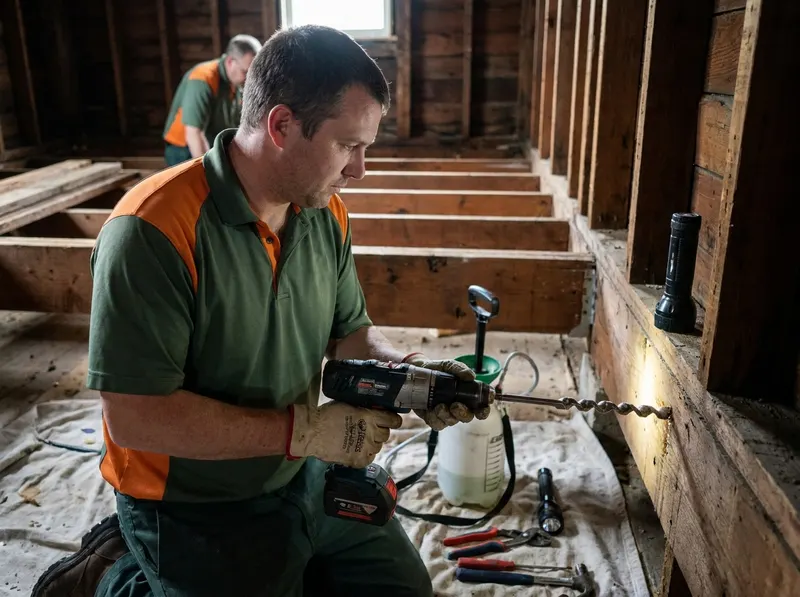
Northern Minnesota's structural timbers face distinct wood-destroying insect pressures due to high shoreline humidity and temperature extremes. In shoreline properties along Birchmont and the Lake Bemidji North Shore, wood-boring beetles target unsealed spruce, fir, white pine, and antique tamarack timbers. Adult beetles deposit eggs into open pores or bark crevices; upon hatching, larvae tunnel inward for 1 to 5 years, consuming cellulose and expelling fine, flour-like frass through small exit holes measuring 1/16 to 1/8 inch in diameter. This concealed feeding activity hollows internal log profiles while leaving an intact outer surface, compromising load-bearing wall logs and roof support purlins across seasonal cabins in Beltrami County.
Remediation methods depend on whether timbers are sealed or raw. Topical sodium octaborate tetrahydrate penetrates unsealed dimensional lumber and rough-sawn logs up to 2 inches deep when wood moisture levels exceed 10%. If log profiles in Northern Township or Diamond Point Park properties possess non-breathable polyurethane stains, surface sprays cannot absorb; technicians must drill 1/4-inch access ports directly along structural stress lines to inject internal liquid borate formulations under low pressure (20 to 40 PSI). For homeowners deciding between chemical remedial treatments and structural wood replacement, chemical remediation halts active biological development without requiring roof disassembly, whereas heavily degraded structural logs with over 30% cross-sectional loss necessitate physical timber framing replacement by a contractor.
Seasonal camps in Nymore and around Southview Terrace encounter edge cases during sub-zero winter temperatures. Borate applications require ambient wood temperatures above 40 degrees Fahrenheit to facilitate active water-based ionic penetration through cellular grain structures. Remediation inside unheated cabins around the Bemidji Town and Country Club area is scheduled once heating systems are activated or following the spring thaw, ensuring full chemical saturation before adult emergence cycles peak between May and July. Routine treatment plans avoid automatic monthly contracts, focusing instead on definitive elimination and long-term moisture reduction below the 12% threshold required for beetle larval development.
Every job gets a firm, written price after a free on-site visit.
Tell us about your wood-boring beetle remediation job in Bemidji and we'll send a clear, written quote, usually the same day.
 Velzora Pest Control