Winter temperatures in Beltrami County routinely dip below minus twenty degrees Fahrenheit, driving white-footed mice, red squirrels, and bats out of the pine canopy and directly into under-floor subfloors and upper…
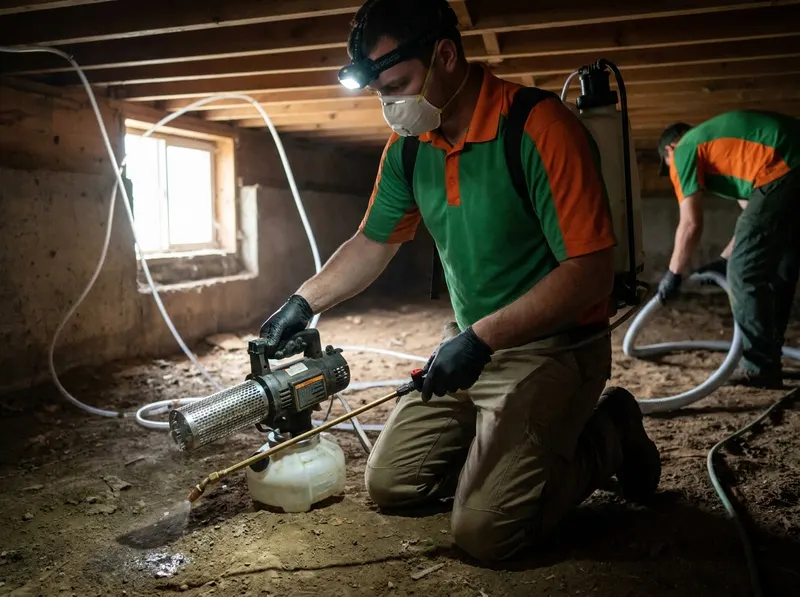
Winter temperatures in Beltrami County routinely dip below minus twenty degrees Fahrenheit, driving white-footed mice, red squirrels, and bats out of the pine canopy and directly into under-floor subfloors and upper attic joists. In neighborhoods like Birchmont, Northern Township, and along the Lake Bemidji North Shore, residential architecture frequently features ventilated crawlspaces beneath lake cabins or unconditioned attics beneath steep metal roofs. When rodents infiltrate fiberglass batts, they compress the insulating fibers, reducing an R-38 thermal barrier down to an ineffective density while depositing concentrated urine, pheromone scent trails, and droppings. Decontamination restores these unconditioned spaces through containment, non-destructive disposal, and surface sanitation using hospital-grade, EPA-registered micro-mists that neutralize hantavirus, roundworm eggs, and fungal pathogens without leaving synthetic chemical odors in living areas.
Selecting localized decontamination versus full insulation extraction depends directly on the depth of the nesting footprint and the structural access of the building. In raised pier foundations common near Diamond Point Park or older stone basements in Nymore, rodents frequently isolate their activity to perimeter sill plates and rim joists. In those scenarios, localized HEPA vacuuming, thermal-fog antimicrobial sanitation, and copper mesh exclusion around mechanical penetrations resolve the issue without the expense of total tear-out. However, when blown-in cellulose in a Southview Terrace ranch or attic floorboards near the Bemidji Town and Country Club area are saturated through the full depth of the substrate, total clearing via negative-air commercial vacuum hoses is necessary to stop secondary infestations of dermestid carpet beetles and mite populations.
The mechanical process adheres to strict sequential standards to prevent airborne particulate drift into living quarters. 1. Technicians seal all interior attic access hatches and crawlspace entry doors with six-mil plastic sheeting and set up negative-air pressure scrubbers venting directly outdoors. 2. Infested bulk insulation, rodent nests, and food caches are bagged inside the containment zone and extracted. 3. Wood joists, subflooring, and masonry surfaces undergo HEPA contact vacuuming followed by an enzyme-based sanitizing spray to neutralize biohazard odors and eliminate pheromone markers. 4. Technicians seal external access holes larger than one-quarter inch using 20-gauge galvanized wire hardware cloth, expanding elastomeric foam, and metal flashing along exterior roof soffits, ridge vents, and rim joist transitions.
Every job gets a firm, written price after a free on-site visit.
Tell us about your crawlspace and attic pest decontamination job in Bemidji and we'll send a clear, written quote, usually the same day.
 Velzora Pest Control