Nesting hornets and aerial wasps construct expansive cellulose nests underneath eaves, pine-shaded deck frameworks, and exterior fascia boards during warm northern Minnesota summers. In lakeside settings such as…
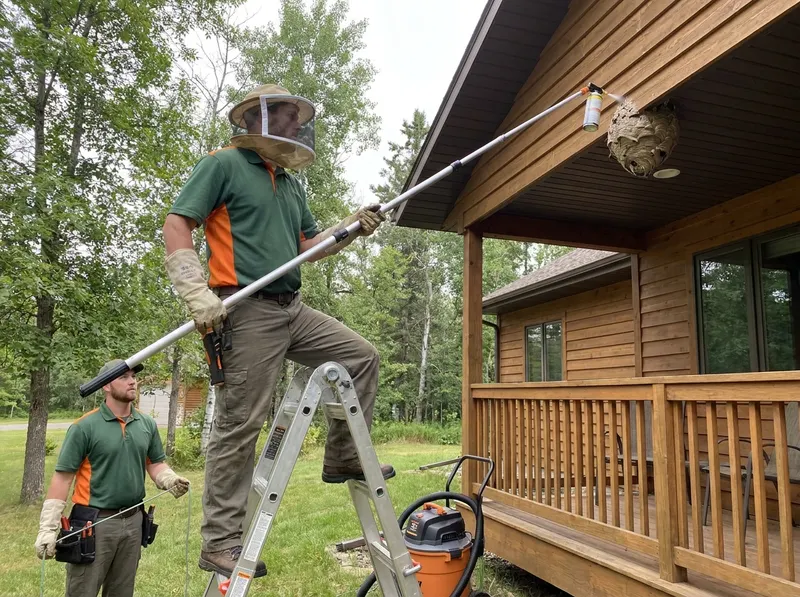
Nesting hornets and aerial wasps construct expansive cellulose nests underneath eaves, pine-shaded deck frameworks, and exterior fascia boards during warm northern Minnesota summers. In lakeside settings such as Birchmont and the Lake Bemidji North Shore, high humidity and continuous lake midge populations provide abundant protein, causing colonies to swell rapidly between July and September. Aerial yellowjackets frequently build enclosed carton nests reaching 14 to 20 inches in diameter directly beneath soffits or cedar shake siding. Unlike basic surface bug spraying, targeted removal neutralizes the defensive guard insects immediately using fast-acting localized contact agents before the core envelope is cut down, bagged, and permanently hauled away from the building exterior.
Ground colonies and void infestations require distinct application methods. In sandy, pine-needle soils common through Northern Township and areas surrounding the Bemidji Town and Country Club, eastern yellow jackets excavate expansive underground chambers across abandoned rodent burrows. Treating subterranean colonies involves pressurized synthetic pyrethroid dust placed deep into the primary entrance tunnel, which workers track through internal combs rather than saturating nearby topsoil. If nesting occurs behind clapboard siding or roof flashing in Southview Terrace, surface aerosol sprays merely drive defensive queens and workers deeper into interior living spaces. Technicians use micro-drilling and void dusting directly into the framing cavity, sealing entry seams with silicone caulking once total worker mortality is reached.
Timing and climate factors dictate stinging insect aggression in northern Beltrami County. Colony populations peak late in the season; as daytime temperatures decline across October near Diamond Point Park and Downtown Bemidji, natural nectar sources diminish, shifting hornet diets toward aggressive sugar foraging. Protective canopy treatments applied to soffits remain effective through lake rains because products bind to treated non-porous surfaces. Homeowners avoid locked multi-year monthly extermination contracts because solitary seasonal interventions successfully extinguish these annual single-generation nests before interior overwintering queens establish future colonies.
Every job gets a firm, written price after a free on-site visit.
Tell us about your stinging insect and hornet removal job in Bemidji and we'll send a clear, written quote, usually the same day.
 Velzora Pest Control