Properties along Birchmont, the Lake Bemidji North Shore, and Northern Township frequently encounter high water tables that elevate relative humidity in ground-level framing. While subterranean termites are…
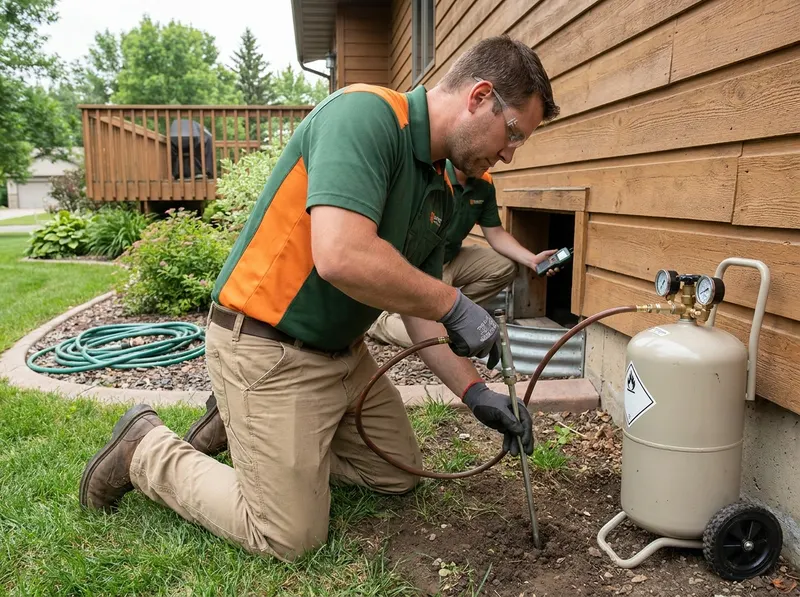
Properties along Birchmont, the Lake Bemidji North Shore, and Northern Township frequently encounter high water tables that elevate relative humidity in ground-level framing. While subterranean termites are historically less common in northern Minnesota than carpenter ants, rising seasonal ground warmth paired with persistently wet crawlspaces creates localized vulnerability. Damp rim joists, uninsulated basement transitions, and soil-to-wood ground contacts near Lake Bemidji State Park provide identical environmental footholds for subterranean wood pests and moisture ants. When timber moisture content exceeds 20 percent, structural cellulose softens, allowing subterranean colonies and moisture-loving wood borers to excavate support beams undetected beneath finished floors.
Subterranean termite and moisture pest defense fits homes, lake cabins, and seasonal rentals displaying damp foundation framing, spongy subflooring, or soil contact near exterior ground lines. If the structural damage involves clean galleries cut through dry, sound timber without soil tube presence, the appropriate path is standard structural carpenter ant treatment; when earthen shelter tubes, damp rot, or high moisture-meter readings dominate the sill plate, specialized subterranean and moisture defense is mandatory. The operational trade-off centers on substrate access: broad-spectrum perimeter sprays handle surface-crawling insects with zero structural disruption, whereas sub-grade barrier installations and targeted wood-injection borates require direct physical access to unfinished crawlspaces, interior foundation walls, and perimeter perimeter trenches.
Service delivery executes in four methodical phases. Step 1: Technicians take baseline moisture readings across sill plates, floor joists, and foundation perimeter bands using calibrated probe meters. Step 2: Foundation walls and plumbing penetrations are cleared of loose debris and inspected for subterranean mud tunneling. Step 3: Low-odor, non-repellent structural termiticide or concentrated disodium octaborate tetrahydrate is applied along critical foundation contact points to create a continuous defensive barrier that does not leach into nearby lake basins. Step 4: The property owner receives an objective moisture assessment outlining ground-vapor ventilation improvements to permanently stabilize interior humidity levels below 50 percent.
Every job gets a firm, written price after a free on-site visit.
Tell us about your subterranean termite and moisture pest defense job in Bemidji and we'll send a clear, written quote, usually the same day.
 Velzora Pest Control